I would be unfair to proclaim that the book is useless. Its absurd convention to render names of the Soviet leaders according to the post-Soviet nationalist orthographies of their ethnic groups makes it almost impenetrable for a junior American scholar but for me it is but a minor impediment.
The strongest feature of this book is its "Comments" section, which lists hundreds and hundreds of sources. Some of them are of dubious veracity, some of them are unadulterated propaganda but many are accurate and/or accurately reflect perceptions and designs of the contemporaries.
The weakest is as always the author's concept as "Stalin as a Demiurge", dictated by the orders of the Party Committee of the Hoover Institution, so that his personal history is non-distinguishable from the history of the USSR. But even in this department he is lacking. The three most significant events of the Soviet history of the period were:
1. Industrialization;
2. Collectivization of agriculture, called by some wiseacres a Second Serfdom
(by Bolsheviks), abbreviated as VKP(b), i.e. then Russian abbreviation for the Communist Party;
3. The Great Purges (1937-1938)
But there is next to nothing about these issues, in particular, the second, which was repeatedly recognized by Stalin as his main "achievement". Concerning industrialization, he only mentions massive purchases of the Western equipment financed by merciless exploitation of practically enserfed peasantry. But if massive purchases of foreign equipment was the only reason for emergence of the USSR as a major industrial power, what in the world could prevent interwar China and Turkey, not to speak of Japan and Italy, which had much less restrictions in what they could buy and from whom, to simulate this experience? Japan before the war could have modernized its Navy, but its aviation designs largely remained in the late 1930s throughout the war and it could not produce a qualified battle tank.
Similarly clueless is his treatment of the Great Purges. Naming Stalin "cruel dictator" or "tyrant" every other page does not explain anything. How could anyone emerge, from an obscure Party apparatchik into an all-powerful dictator in the span of six years, and then as a demigod in the span of another six years? Kotkin correctly mentions that his line did not command a majority in Politburo even during collectivization, yet it was his vision of the country, which always prevailed in the end.
The largest emphasis according to the overall direction of the book is dedicated to the border wars with Japan (1930-1939) and Winter War with Finland (1939-1940). His explanation of the reasons for both wars is surprisingly lucid given his complete confusion with respect to almost everything else, especially military matters and economics (see above). Even his description of the Polish Government of "Sanitation period" as "a nasty regime squeezed between two nastiest" is apt. But this can only be explained that, unlike American neocon agitprop, Finnish nationalist agitprop required to be followed by the Hoover Party Committee is not as counterfactual and stupid.
Saturday, September 14, 2019


Saturday, August 31, 2019
Edward Judge and John A. Langdon, A Hard and Bitter Peace: A Global History of Cold War
Professors Judge and Langdon wrote a book, which slightly deviates from the neocon orthodoxy--American foreign policy is not depicted as a continuous thread of victories--and its motives are not described exclusively in terms of "promotion of liberty and democracy". Thus, Ed Judge teaches in Le Moyne College, Syracuse--not in Harvard, or Yale. You cannot find it in normal Google or Amazon searches, instead typing "Cold War in Asia" or "Cold War, Global", you will be directed to the usual neocon agitprop. I cannot even say whether this book is especially good, or bad, because local "Barnes & Noble" where I browse books that my limited budget and even more limited living space would not allow, already sold the only copy. But my limited browsing established that at least some Cold War conflicts are discussed in terms of Realpolitik, i.e. without obsessive desire to point at a moral lesson.
Saturday, August 24, 2019
What Happened to American Century? Foreign Affairs, July/August 2019

Neocon editors of the "Foreign Affairs" obsessively repeat that United States are still No. 1. Did anybody need this reminder in the sixties during proclamation of the JFK's "New Frontier" or Johnson's "Great Society"? Equally obsessive is the neocon assurance on almost every page that Russia is an insignificant state, soon to disappear. Especially vitriolic are Alina Polyakova and that constant racist fixture of "Foreign Affairs", AEI's Daniel Eberstadt. If Russia's is currently so insignificant and its inevitable demise is true, why speak of it so much? Three out of 15 long reads dedicated to Russia directly and at least two--Rose and Zakaria touching Russia in every elliptical moment--suggest unhealthy obsession in their world perception. Neocon preoccupation with Russia can only be explained that they are locked in a time warp infinitely re-playing World War II on the side of the Nazis and their Eastern European supplicants so lionized by the current American media.
Wednesday, August 21, 2019
Shame on you, people!

Bookstores, online and otherwise, proudly display Mueller Report with the preface of Alan Dershowitz. While his reputation as a star lawyer, unlike reputations of Francis F. and Niall F. as social scientists is solid, to me it is like issuing a collection of poetry with a preface of Charlie Manson, or a book on childhood psychology edited by J. W. Gacy, though the latter obviously knew a lot about the subject.

Unstoppable President Robot Chicken
Wednesday, July 31, 2019
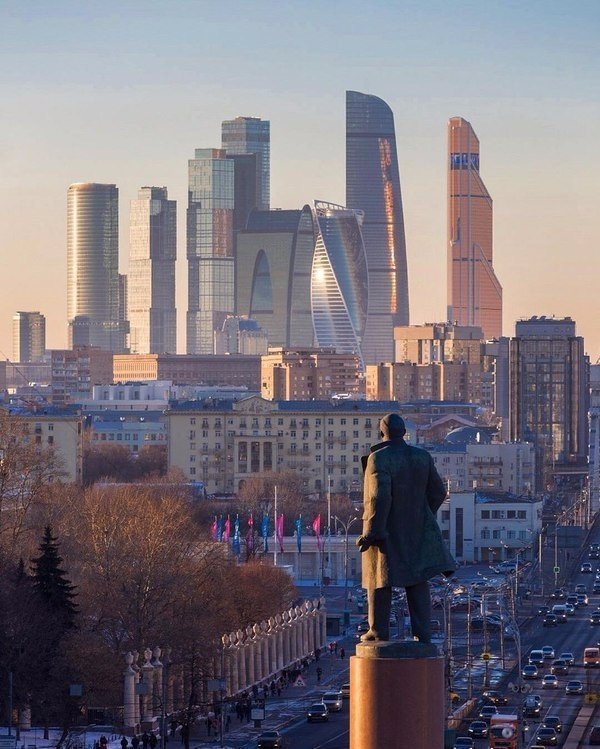
Lenin's revenge
Vladimir Lenin to cement his leadership role in the Communist Party (RSDRP(b)--Russia's Social Democratic Party--Bolshevik) had to write treatises on Marxist theory. This was not an innovation--for instance, Napoleon III, the Little, had to issue artillery manual to hide in the mantle of his uncle, Napoleon I, the Great. But Lenin's 1914 opus, Imperialism as the Highest and the Final Stage of Capitalism, was shamefully kowtowed by the college teachers of Marxism-Leninism in my youth. The reason was obvious--his treatise, largely plagiarized from Rudolf Hilferding (1877-1941)--contained very specific predictions, which turned spectacularly wrong. First, that in the coming epoch, financial capital will acquire higher and higher role and replace the industrial capital in the future societies. Second that because of easy transfer of financial assets in relation to industrial assets, the capital transfers will dwarf the commerce in goods and services. Third that this will result in expansion of colonial policies. Finally, the continuous colonial expansion will lead to incessant wars by the imperialist powers.
In the 1960s all this seemed entirely absurd. Industrial giants, like Boeing, Ford or General Motors, towered over meager servants of the American industry such as Mellon Bank or Chase Chemical. International commerce exceeded international investment multiple times. Former colonies acquired independence every other day. Finally, most Western powers seem to lose completely their appetite for military adventures and when they did, as in Vietnam, they failed miserably.
This became clear even in 1920-1930s when the most dynamic of the Western societies did not have colonies (USA and Germany) and their banks evolved from the masters of the economy in Wilhelmine Germany or Robber-Baron age in the US into "home banks" for the industries, like Mellon for the US Steel or Dresdner and Schaffhausen? for Thyssen and Stinnes' empires. To remedy the situation--when the Marxist literature still had to be read by aspiring Party functionaries--Nicolai Bukharin and Eugene Varga produced theory of "State-Monopolistic Capitalism". In the State-Monopolistic Capitalism framework, the future capitalist state instead of pursuing laissez-faire policies will interfere more and more in economy with the goal of its stabilization, primarily on the side of national monopolies. Bukharin was shot in 1939?, Varga was demoted from all party posts in 1947 because his theory suggested continuing vitality of capitalism, which did not sound good on the outset of the Cold War. Yet, probably because he predicted the success of the New Deal, in the face of Komintern dogma of the impending "General crisis (doom) of capitalism", he was sufficiently valued by Stalin to exterminate him outright.
Unlike the Lenin-Hilferding work, which was glossed over and forgotten, the theory of State-Monopolistic Capitalism, became the centerpiece of Soviet Political Economy even after the demise of its founders. In particular, it fit very well with the Eisenhower's notion of Military-Industrial Complex and the realities of the Cold War. Only with perestroika when laissez-faire doctrines shoved by Reagan propaganda started to reach the Eastern Bloc in earnest, the Bukharin-Varga theories lost their attraction. Soft voices of the Soviet economists who grew up in Marxist schools and who suggested that Reagan-era policies were hardly a realization of dreams of J.-B. Say and von Hayek, were drowned by the victorious new orthodoxy. By the early 1990s, Czech researchers who were suspect in Keynesian sympathies, were as thoroughly purged from academia as their 1960s predecessors questioning Marxism-Leninism.

But, currently, the old predictions came back with the vengeance. Capital flows have exceeded transfers of goods and services between the nations. Compensation of the managers of hedge funds exceeds dozens of times the compensation of CEOs of the largest industrial and service companies. The largest financial institutions, particularly the ones created by Soros and Paul Singer, even conduct their own foreign policy. United States and its allies are engaged in continuous colonial warfare--directly, such as Afghanistan, Yemen and Iraq, only from the air as in Libya and former Yugoslavia, or by weapons and money transfers (e.g. South Sudan but also in myriad other places).
Not that the State-Monopolistic Capitalism theory of Bukharin and Varga did not find its own revenge. Currently, most of the growth of the market capitalization of the large companies in the USA comes to the virtual monopolies, so tightly related to the intelligence community that, for a while, the notion of "Intelligence-Industrial Complex" by the analogy of the "Military Industrial Complex" of Eisenhower appeared in the media. Of course, they did not like it and it disappeared without a trace.
Microsoft, which absorbed Skype, Google, partnering with Linkedin, Amazon and ubiquitous Facebook are the giant vacuum cleaners obtaining terabytes of private information. CNN, CNBC and Fox conduct 24-7 broadcast on TV screens all over the world, the first two mostly aligned with US Government propaganda and "Fox" dancing to the tune of one man, Prince Ruprecht of Murdoch. In the case of CNN former heads of intelligence, such as Brennan, or Clapper, or their "pocket congressmen"--Adam Schiff, or Mike Rogers--and a clutter of smaller spooks became a sad fixture of any international commentary. Not to speak of the cottage industry of the "think tanks", which used to be like RAND in its best years, intellectual brain trusts, but now became partisan establishments, whose purpose is to justify immature ideas of their founders and sponsors, many former government officials or senators/congressmen themselves, with "scientific" data and research.
Recently, the tentacles of the "Collusion of the power of the militaristic state with that of the capitalist monopolies"--that is how the ancient Marxists characterized their State-Monopolistic Capitalism--reached to specific companies. Direct attacks on Russia's Kaspersky and Rusal--none have anything to do with the Russian military, Ukraine or Crimea--and China's ZTE and Huawei had the only purpose of stifling technological development of the possible competitors. But the heaviest blow fell on Bombardier and Embraer--the flagships of high-tech industries of Canada and Brazil, respectively, which are the allies of the US but do not have the benefit of the state support enjoyed by Russian and Chinese companies--and the Deutsche Bank.
In early 1980s, when the Soviet Union--with Afghanistan occupied and Polish rebellion subsiding-- seemingly was at zenith of its power, I suggested that the superpower with such degree of provincialism, self-deception, dysfunction and narcissistic view of themselves by the elite cannot stand, no matter how many tanks and MIRVs it has in its arsenal. Of course, I was considered a harmless nut by some of my pals and, probably and luckily, by the KGB. But USSR was gone in a decade. American institutions are more robust that Soviet Union's ever were but does this mean that they can suffer infinite amount of wrecking? I don't think so.
But, currently, the old predictions came back with the vengeance. Capital flows have exceeded transfers of goods and services between the nations. Compensation of the managers of hedge funds exceeds dozens of times the compensation of CEOs of the largest industrial and service companies. The largest financial institutions, particularly the ones created by Soros and Paul Singer, even conduct their own foreign policy. United States and its allies are engaged in continuous colonial warfare--directly, such as Afghanistan, Yemen and Iraq, only from the air as in Libya and former Yugoslavia, or by weapons and money transfers (e.g. South Sudan but also in myriad other places).
Not that the State-Monopolistic Capitalism theory of Bukharin and Varga did not find its own revenge. Currently, most of the growth of the market capitalization of the large companies in the USA comes to the virtual monopolies, so tightly related to the intelligence community that, for a while, the notion of "Intelligence-Industrial Complex" by the analogy of the "Military Industrial Complex" of Eisenhower appeared in the media. Of course, they did not like it and it disappeared without a trace.
Recently, the tentacles of the "Collusion of the power of the militaristic state with that of the capitalist monopolies"--that is how the ancient Marxists characterized their State-Monopolistic Capitalism--reached to specific companies. Direct attacks on Russia's Kaspersky and Rusal--none have anything to do with the Russian military, Ukraine or Crimea--and China's ZTE and Huawei had the only purpose of stifling technological development of the possible competitors. But the heaviest blow fell on Bombardier and Embraer--the flagships of high-tech industries of Canada and Brazil, respectively, which are the allies of the US but do not have the benefit of the state support enjoyed by Russian and Chinese companies--and the Deutsche Bank.
In early 1980s, when the Soviet Union--with Afghanistan occupied and Polish rebellion subsiding-- seemingly was at zenith of its power, I suggested that the superpower with such degree of provincialism, self-deception, dysfunction and narcissistic view of themselves by the elite cannot stand, no matter how many tanks and MIRVs it has in its arsenal. Of course, I was considered a harmless nut by some of my pals and, probably and luckily, by the KGB. But USSR was gone in a decade. American institutions are more robust that Soviet Union's ever were but does this mean that they can suffer infinite amount of wrecking? I don't think so.
Subscribe to:
Posts (Atom)